West African Working Bush Dog
February 26, 2009
These are photographs of photographs I took in 1997 in The Gambia. The dog is one of three that serve as guardians for a beautiful herd of Fulani cattle. The structural conformation is very much like an Azawakh but many of the “bush dogs” in that area tend to be quite rustic and unrefined. Specimens with one or both ears erect were not uncommon, tails tendto be thick-ish and the hair was usually somewhat longer than is typical of Azawakh. The temperament is the same as typical of Azawakh. I believe these dogs and Azawakh are very closely related.
It was common practice for male working dogs to have cropped ears. I’m not sure if the primary purpose was to proactively prevent torn ears or to identify the dog as owned by someone (and therefore not to be killed).
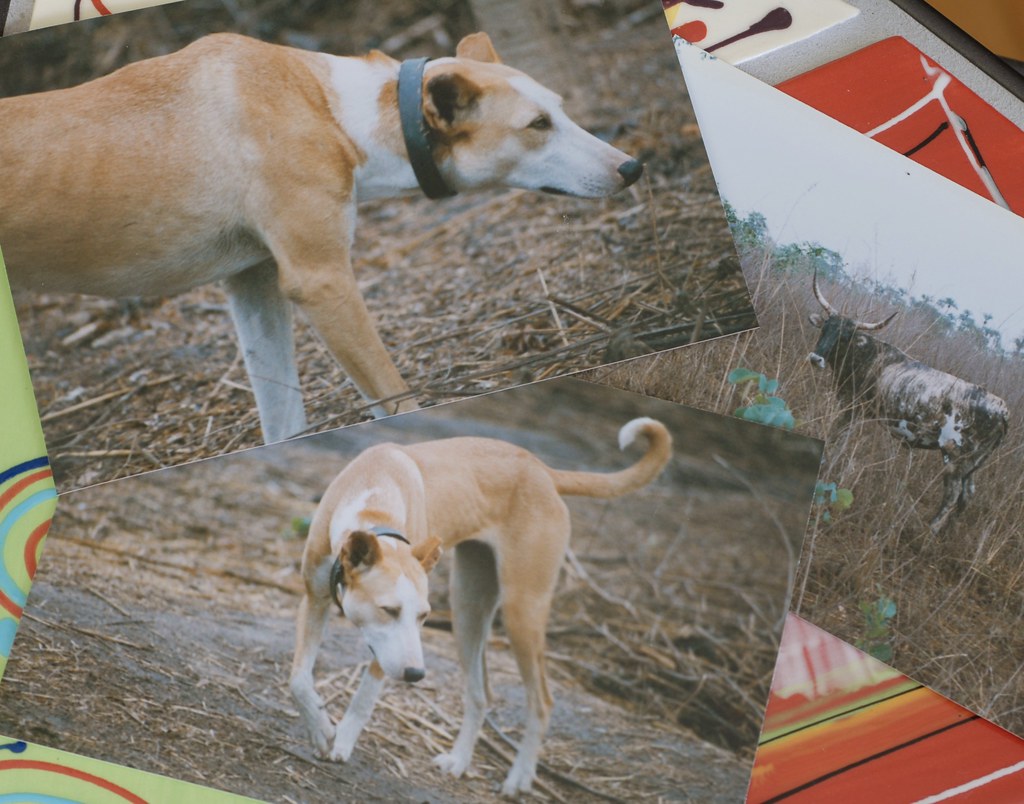
West African bush dog protecting his cows
After thieves, the biggest risk to cattle might have been hyenas. The bush dogs that guard herds were expected to keep hyenas at bay.
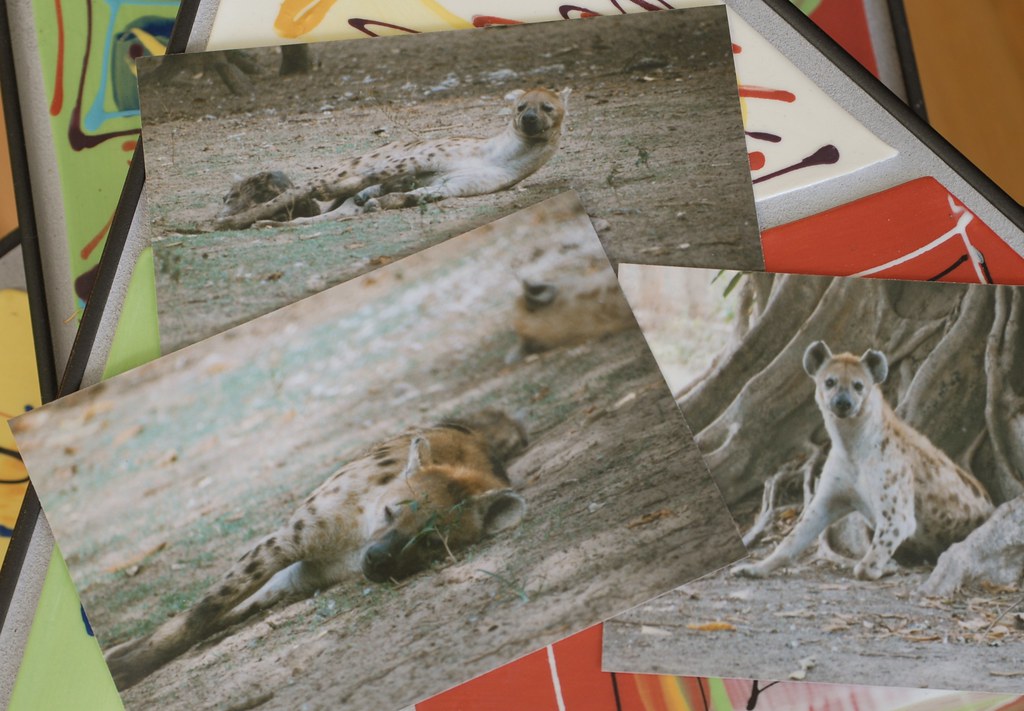
West African Hyenas, the enemy of the bush dog
The Warm Spot
February 5, 2009
Today it is 15 F outside and a wicked wind is blowing. Azelouan found himself a nice warm spot in the sun to warm his bones.

Azelouan in his warm, sunny spot
Today we have sunshine
February 2, 2009
It seems like forever since we have had anything but grey skies and below-normal temperatures. The dogs definitely noticed the improvement. Tawzalt came into my office to bask herself.
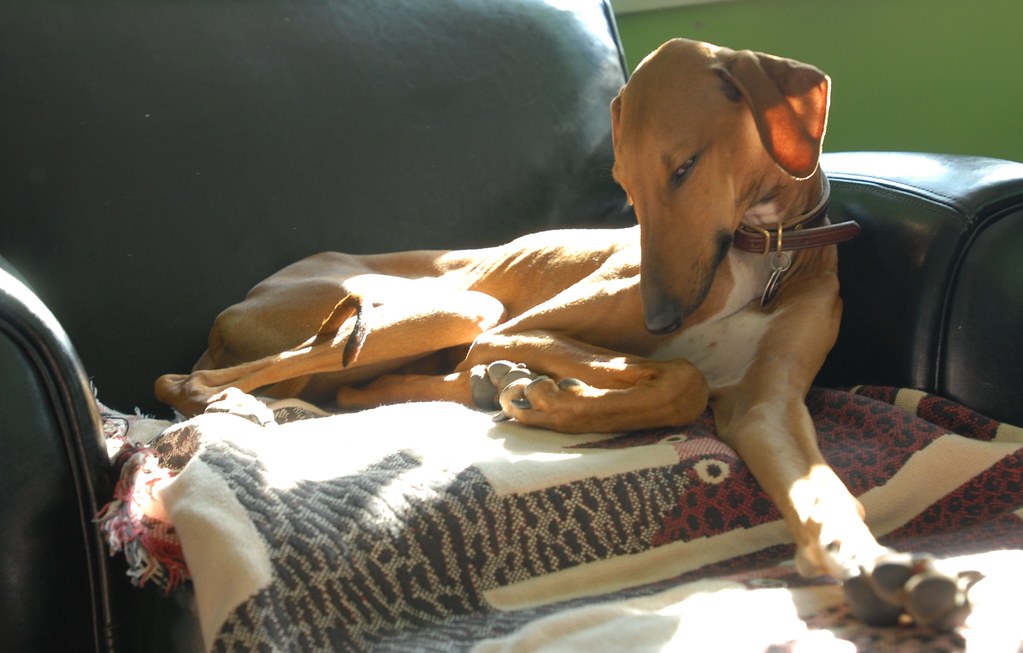
Tawzalt basking in the warm sunlight

Enjoying the sun, but still still watchful.
Azawakh in Djerma
January 29, 2009
The word “Azawakh” comes from the Djerma language, but it has nothing to do with dogs.
In Djerma azawa means north. Azawagh or azawad means land of to the north. The word the Djerma use for what we call the Azawakh dog is hansi or hanso (I’ve also seen it spelled hanshee and hanshii).
The really fascinating thing is that there are three gender forms. One for dog and two for bitch. The Djerma have a different conjugation of the word dog for a bitch who has given birth and one who has not.
- hansi daŋ: dog (male)
- hansi way: bitch [has not given birth]
- hansi nya: bitch [has given birth]
A little bit of digging revealed that this is a feature of the Djerma language. For all livestock there are three gender forms: one for male, one for female-that-has-not-produced-offspring and one for female-that-has-produced-offspring.
Chicken
- goroŋgari (rooster)
- goroŋo way (hen)
- goroŋo nya (hen)
Camel
- yo mali (camel bull)
- yo way (camel cow)
- yo nya (camel cow)
This must be a culture with a deep tradition of animal breeding.
reference: http://www.djerma.nl/
“Stupid-Seeking Missiles”
January 22, 2009
This comment on The Old New Thing really cracked me up. I love it. My phrase of the day is now “stupid-seeking missiles”.
9 out of 10 “viruses” todays arent [sic] computer viruses in the classical sense. They are what I call “stupid seeking missiles,” which can only hit stupid people…
These Stupid Seeking Missiles scream “Click-on-me!!”, “Run me or else!!”, and other such stuff. Essentialy [sic], they spread precisely because somebody trusted it when they shouldn’t have.
Snuggle
January 21, 2009

Cassandra in jams snuggles Tawzalt
My wife insisted that Tawzalt needed an inaugural bath. If I say that Tawzalt detests being bathed it is not true only because detest is not a sufficiently negative verb. She does quite enjoy being snuggled and comforted by my daughters afteward, though.
BARF Mythology
January 20, 2009
I came accross an interesting article by Steven E. Crane that argues against Biologically Appropriate Raw Food (BARF) feeding for dogs. This article takes fundamental issue with the logic of BARF because the premise that wolves are dogs and that BARF is a natural wolfe diet appropriate for all dogs is wrong on several levels.
Crane’s anti-BARF argument, in a nutshell, is that dogs are not wolves any more than people are chimpanzees. Even if dogs were wolves; wolves, unlike cats, are not obligate carnivores. The order Carnivora is defined by dentition, not dietary habits. (The giant panda, for instance, is a member of the order Carnivora but subsists on a largely herbivorous diet.) Wolves are omnivores with a penchant for meat and, in any case, wild wolves live lives that are, to use the words of Thomas Hobbes, nasty, brutish and short.
A very small segment of pet owners have accepted the opinions of a vocal fringe minority of individuals who are currently proponents of feeding raw foods. The diet is commonly called the BARF diet, (Bones And Raw Food). Individuals within this group often make unsubstantiated claims that sound plausible but are typically unsupported in fact. The barf diet is extolled based primarily upon several myths claimed to justify the feeding of this diet.
Myth 1 – Claimed similarities between modern wild canids and the domestic dog, and thus modern domestic dogs therefore have identical genetic development and nutritional needs as wild canids.
Myth 2 – Claims of increased disease levels and shortened life spans in pet dogs versus claimed lack of disease and increased life spans in wild ancestral canids like wolves and coyotes.
Myth 3 – Claimed reduced levels of parasites.
Myth 4 – Claimed reduced levels of food intolerance, adverse reactions to foods, and or “allergies”.
Myth 5 – Claims that feeding “raw meaty bones” are good for domestic dogs.
Myth 6 – Claimed increased value of uncooked foods versus cooked foods and subsequent loss of trace micro-nutrients by the cooking process.
Popular discussion of BARF in the US is based to a large degree on myths promoted by superficial and hyperbolic promoters of one product or another, or those selling the latest version of video tapes, books, supplements, foods and other materials. Barfers’ typically denigrate any information that is derived from solid scientific studies as having been “tainted” by some supposed conspiracy of involvement between commercial pet food companies, veterinary teaching universities, the FDA, USDA, CDC, WHO, and any other evidence knowledge based organization. At the same time Barfers accept at face value opinions promoted by purveyors of Barf products and scaremongering media. No level of competence or proof is demanded of those who state facts in favor of Barf feeding; while multiple, peer reviewed published university research studies are often denigrated by Barfers’.
This paper seeks to examine some of these myths. As a confirmed Barfer once noted, the decision to feed BARF is an emotional one, not a science based decision. As we shall see, making decisions based on emotions can lead one astray.
Remain Dignified
January 20, 2009

Remain Dignified
Azelouan is working hard to retain his dignity while Theodora giggles with Tawzalt poking her ear.
“Sea Kittens”, Seriously?
January 17, 2009
I heard this on NPR so it must be true:
“Sea kittens” is the new term being used by People for the Ethical Treatment of Animals, for the creatures they believe are in dire need of an image makeover: fish.
“PETA thought that by renaming fish sea kittens, compassionate people who would never dream of hurting a dog or a cat might extend that sympathy to fish, or sea kittens,” PETA campaign coordinator Ashley Byrne says.
My favorite part of this story is when NPR interviews a little girl about what she thinks of the “sea kittens” marketing campaign and the girl says, “They [PeTA] say that they are intelligent but they’re not really. They have tiny, tiny little brains. Tiny. Miniature…”
And story ends with this hilarious quote:
“It may raise some money for PETA but I don’t think it will change the way we manage the fisheries… I think I may eat some sea kittens tonight.”
Google News, Bush and Mental Illness
January 17, 2009
Sometimes the great Google overmind does the cutest things. See here where it gathered together stories about mental patients being released early and put a nice photo of President George W. Bush right next to them as an illustration.



 Aidi wan n'Eezel: the loyal azawakh