Remain Dignified
January 20, 2009

Remain Dignified
Azelouan is working hard to retain his dignity while Theodora giggles with Tawzalt poking her ear.
Christmas
December 27, 2008
Also available as a slideshow.

Pencil!

Stickers!

Play-Doh!

Team Unwrapping

Slightly concerned.

Is it for me?

Jaw wrestling Azawakh.

Dressing Dolly

All curled up.

Cassandra raids the fridge.

Sunlight snooze
Hard Life
December 22, 2008
It’s a hard life being a city dog, sometimes.

Azelouan melted into the bed.
Lazy Morning
December 14, 2008
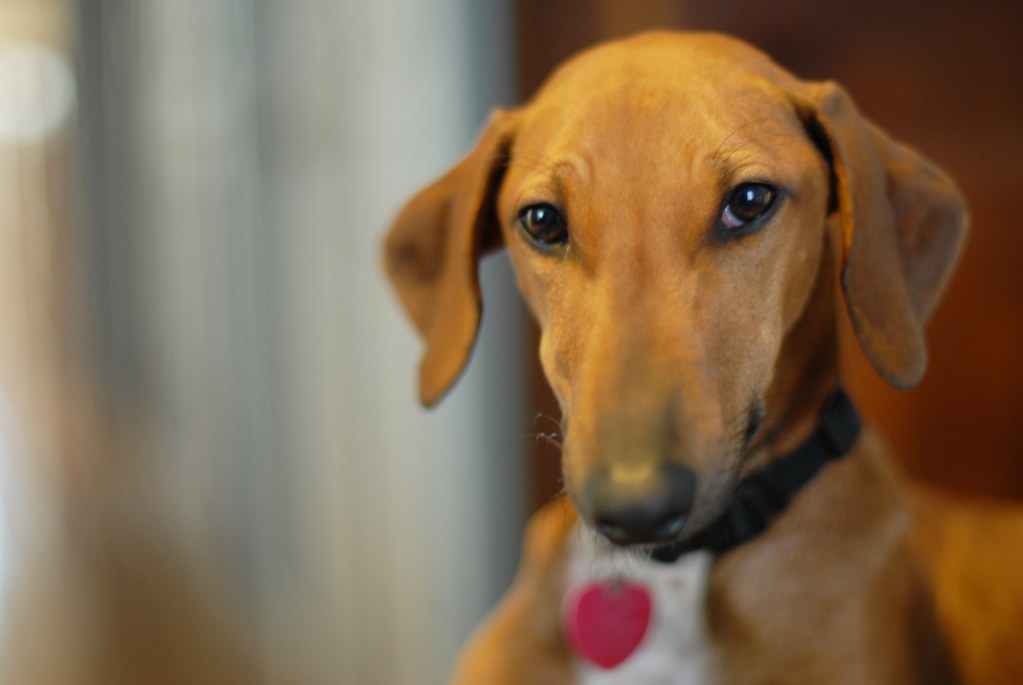
Good Morning, Tawzalt
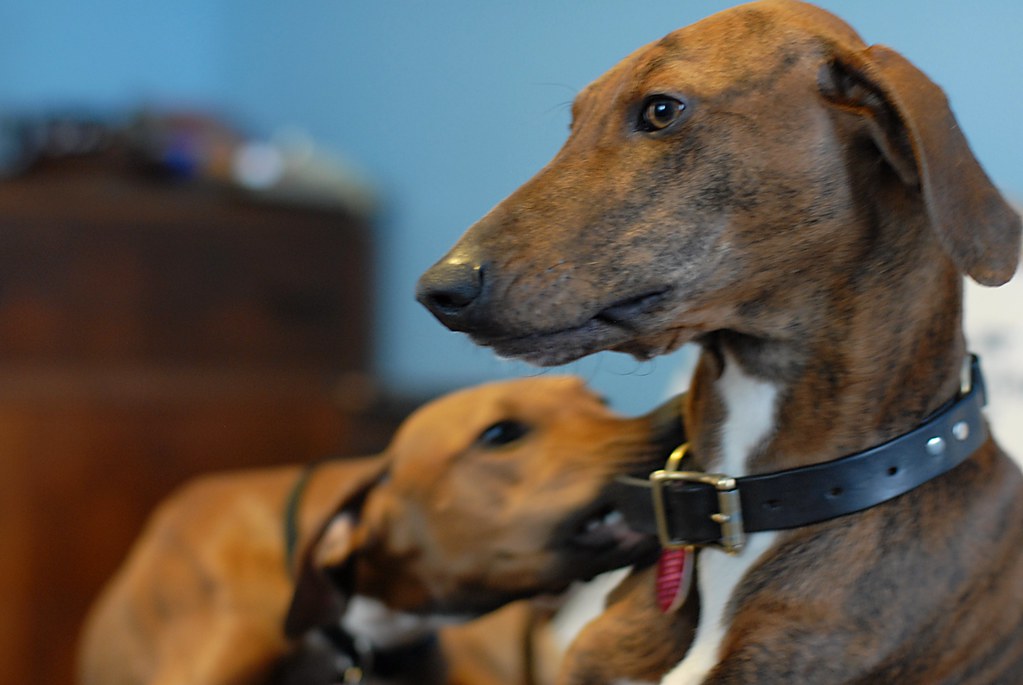
Gnaw on Azelouan

Nuzzle Azelouan
Great Service
December 12, 2008
I just had a great service experience from Erin Campbell at Hound Togs. It’s getting cold here and I needed a coat for Tawzalt. She is still only 7 months, so I wanted to get a coat that is sized just big enough that she can grow into it but without being enormous.
I used the tools on the Hound Togs website to describe Tawzalt so that they could size the coat for her. Shortly thereafter I got both a call and email from Erin. She had decided that none of the prêt-à-porter sizes were quite right. She offered to customize a large whippet coat to fit Tawzalt at no additional charge.
This was above and beyond service. It was great dealing with her. The coat arrived today and it fits a bit loose with some room to grow, just like I asked.
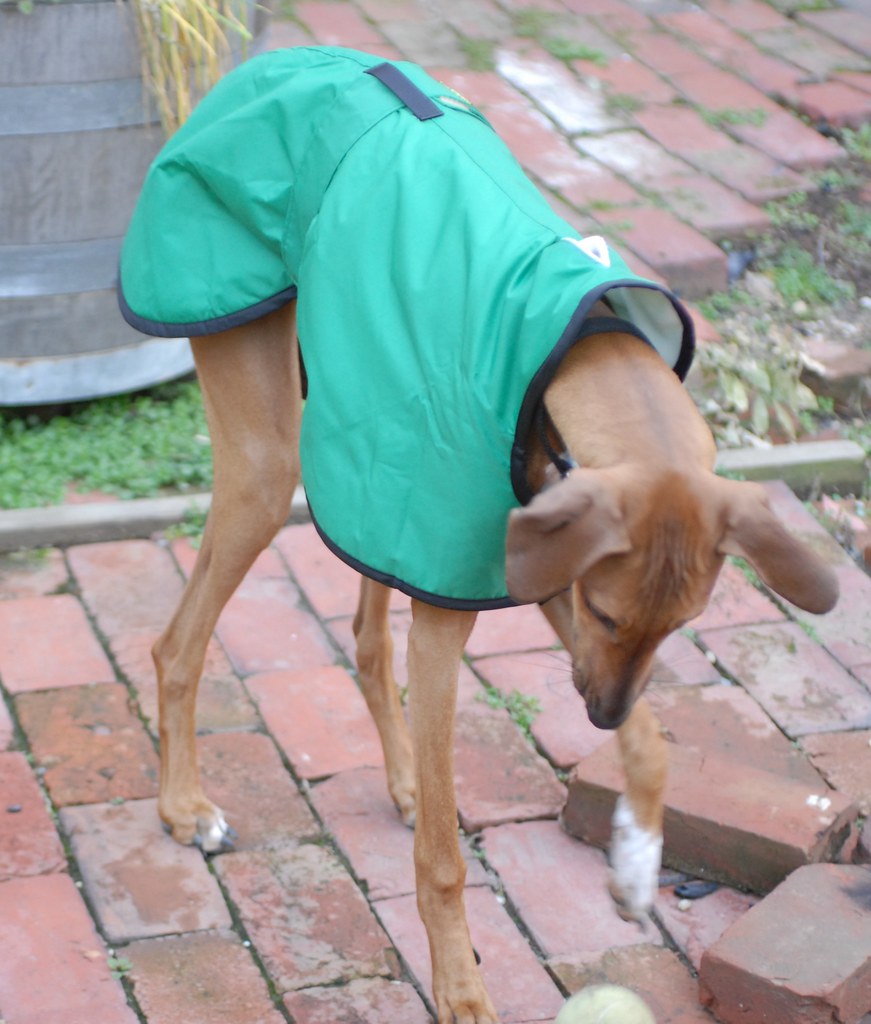
Tawzalt playing in her new coat.
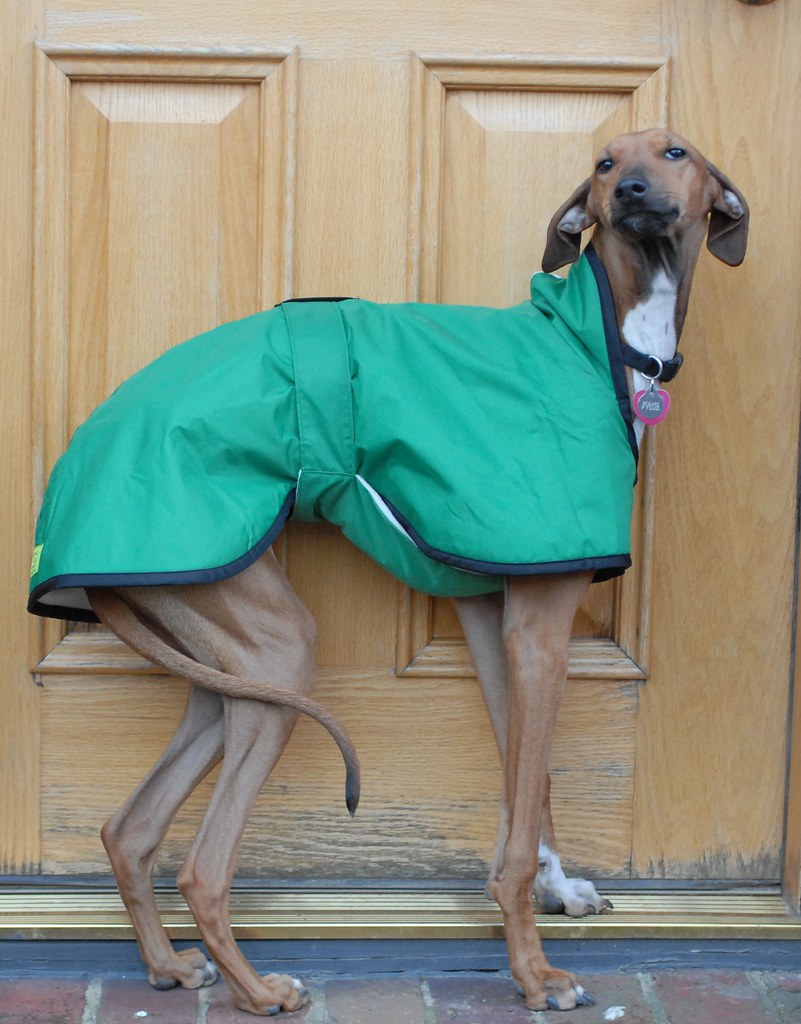
It's still cold out here, stupid.
Savage Azawakh
December 7, 2008
A typically savage moment between an Azawakh and a child.
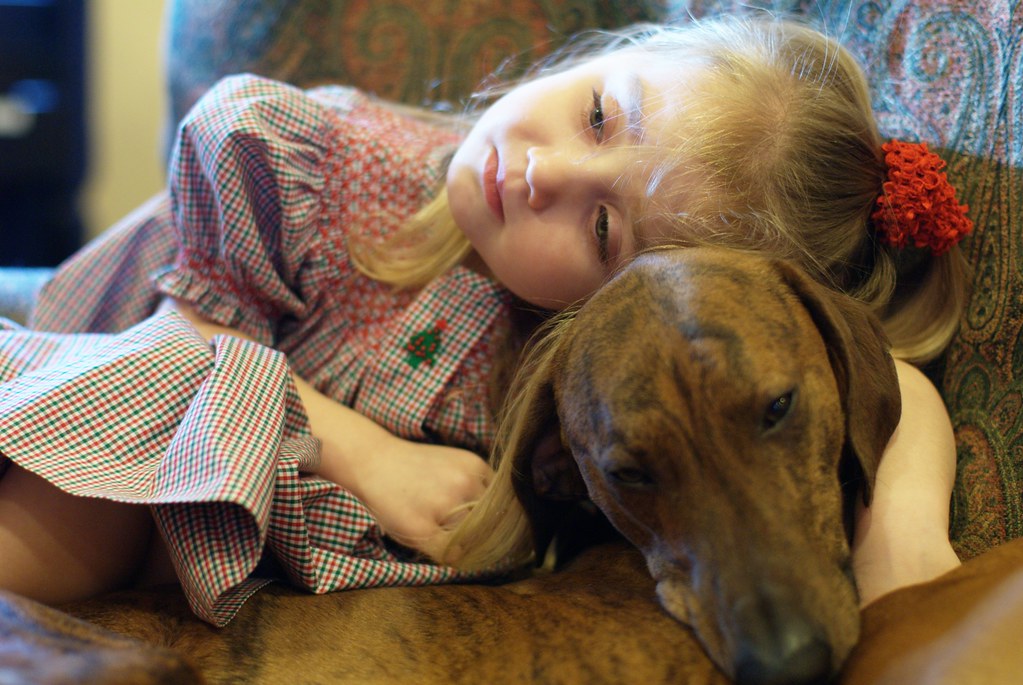
Cassandra cuddling Azelouan
Azawakh are Tremendous Leapers
December 6, 2008
The combination of a vertical format, low body mass and powerful muscles yield tremendous jumping ability in Azawakh. In West Africa I once saw a Fulani dog leap over a 10 foot wall. It took the dog two tries.

Azelouan learning to fly @ 9 months
Azelouan leaped the stream and landed safe and dry on the other side. I was able to position myself to capture this image because he does this all the time.
Azawakh follow Allen’s and Bergmann’s Rules
December 4, 2008
Theory
In 1887, Joel Asaph Allen posited a biological rule that warm-blooded animals in colder climates tend to have shorter limbs than the equivalent animals from hotter climates. Christian Bergmann, posited a similar rule in 1847. Bergmann’s rule is that the body mass of warm-blooded animals increases in colder climates.

Azelouan 110 degrees Fahrenheit
The mechanism behind these phenomena is thought to be temperature regulation. Warm-blooded animals have to maintain a narrow core body temperature range or they die. Surface area to volume ratio is a critical factor in heat transfer. A low surface area to volume ratio tends to retain heat while a high one tends to radiate heat into the environment. This effect is the reason that car radiators and the heat exchanger in an airconditioner have huge surface area.
Surface and Volume
Shape controls the ratio of surface area to volume. A sphere is the shape with the minimum surface area for volume while a flattened pancake has close to the maximum surface area for volume. This is oranges burst when you squeeze them. As the orange flattens, its volume stays constant but the skin must stretch. Eventually you exceed the elasticity of the skin and the orange bursts.
Another example is a stack of 8 sugar cubes (1cm x 1cm x 1 cm). If you stack the cubes 2 x 2 x 2, then the volume is 8 cubic cm and the total surface area is 16 square cm. If you stack the cubes in a 1 x 2 x 4, then the volume is still 8 cubic cm but the total surface area is 22 square cm.
Azawakh Morphology
Azawakh are medium-sized hounds in the range of 40-50 pounds. That makes them the same mass as a Norwegian Elkhound but about 7 inches taller. That’s Allen’s rule in play. An English Greyhound is of roughly similar height to an Azawakh but weighs 20-30% more. This is Bergmann’s rule in play.
To use a car metaphor, the Elkhound has the same size engine but a much smaller cooling system and the Greyhound has the same cooling system but a much larger engine. The flat, dry musculature, long legs and high tuck of the Azawakh are all adaptations for heat tolerance.
Coursing @ Hanover
December 2, 2008
While not really the same as chasing live critters, some Azawakh enjoy the lure coursing game.

Azelouan at the start line
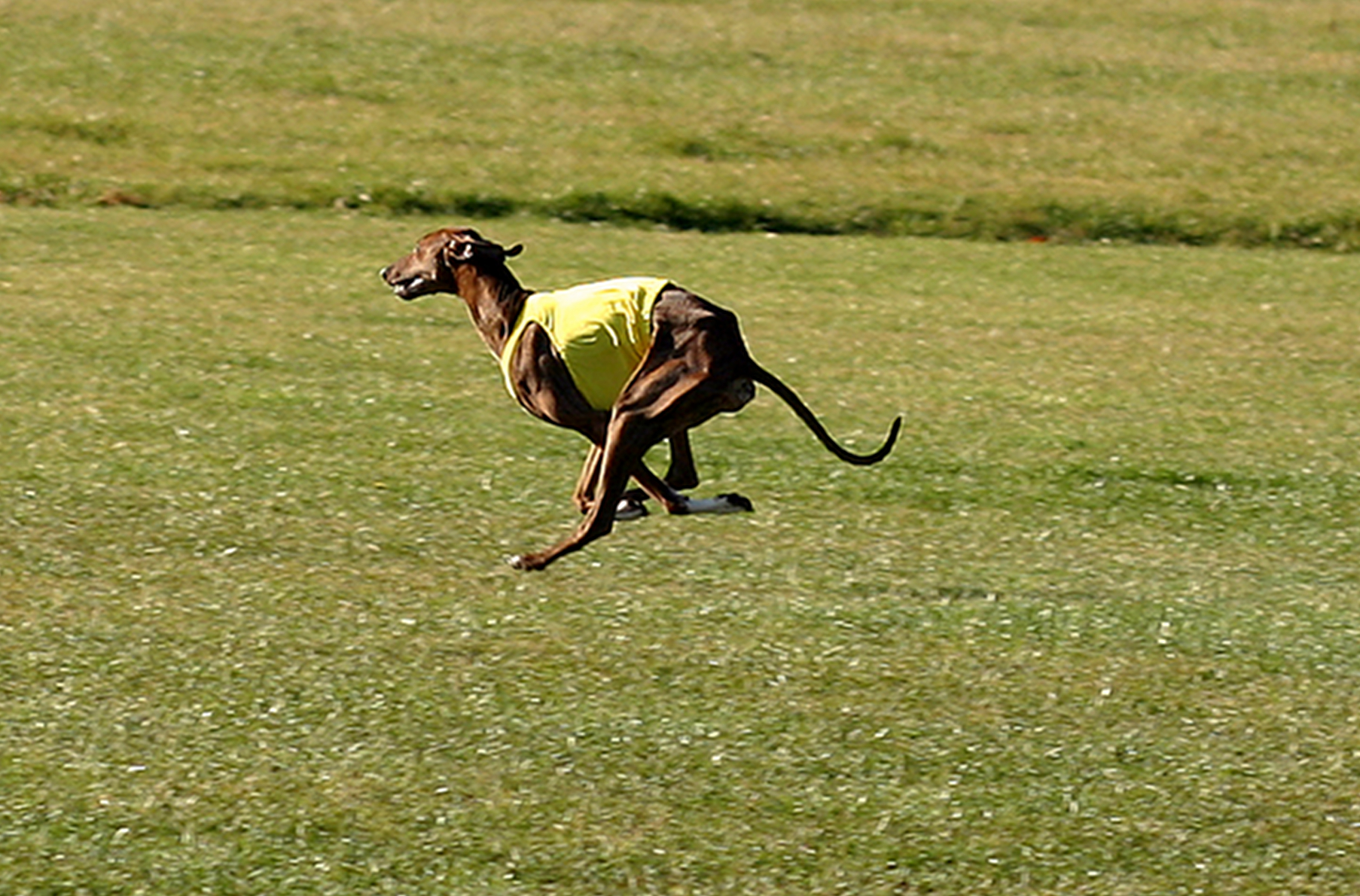
Azelouan coursing the lure
Images © 2008 Stir Greer.
Again With the Color Standards for Azawakh
December 1, 2008
Previously, I wrote about the color rules in the FCI standard for the Azawakh breed. The FCI or Fédération Cynologique Internationale is the governing body for purebred dog standards throughout Europe and most countries. At a high level, the way this works is the main body sets standards and policies in Belgium and then member kennel clubs in each country administer a registry. The big exception is the USA and England which have their own kennel clubs which set their own breed standards. I don’t know this definitively, but I’m guessing that since the Kennel Club (KC) and American Kennel Club (AKC) were founded in the 1890s by a number of uptight pretentious men they had very little interest in taking orders from a wholly separate set of uptight European pretentious men who only got around to organizing themselves in the 20th century.
The point I’m getting at here is that the AKC and KC can have totally different rules and standards for a breed than the FCI. In fact, they don’t even have to recognize the same breeds as the FCI.
Take Azawakh, for example.
The FCI recognizes Azawakh as an official breed with a rigid standard. The AKC recognizes Azawakh as a rare (foundation stock) breed which cannot even be shown in regular dog shows. The status as a foundation stock breed means that things like the registry and conformation standard for the Azawakh are in flux with the AKC and considered fungible. Some things have already been changed relative to the FCI standard: colors, for example.
The standard proposed by the American Azawakh Association for use by the AKC is the same as the FCI standard except where colors are concerned.
FCI Standard
Color: Fawn with flecking limited to the extremities. All shades are admitted from clear sand to dark red. The head may or may not have a black mask and the list is very inconsistent. The coat includes a white bib and a white brush at the tip of the tail. Each of the four limbs must have compulsorily a white “stocking”, at least in the shape of tracing on the foot. Black brindles are allowed.
Eliminating faults:
…
Absence of any white marking at the extremity of one or more limbs.
Light eyes; ie. bird of prey eyes.
Proposed AKC Standard
Color: Fawn, clear sand to dark fawn, brindle, white, black, grey, blue, grizzle, parti-color, and all shades of brown to include chocolate. The head may or may not have a black mask. There may be white markings on the legs, bib and at the tip of tail.
Eliminating faults:
…
Absence of any white marking at the extremity of one or more limbs.
Light eyes; ie. bird of prey eyes.
The standard proposed for the AKC is much better that the FCI one. Since it now includes everything but the kitchen sink, is it even meaningful or is it just a complicated tangle of words that nobody can possibly remember? Also, there are combinations of acceptable colors that would guarantee the eliminating fault of “light eyes”, such as homozygous blue dilution with homozygous liver (dd + bb). The light eye prohibition seems to be baseless.
Field studies conducted by ABIS have found that there Kel Tamasheq do not systematically select for particular colors. It seems to me that we should adopt the same lack of criteria. After all, the dogs are much more theirs than ours.
Color is a distraction that shouldn’t be driving the selection of Azawakh. I propose a straightforward and easy to remembe simplification that would make color a non-issue.
Straightforward Standard
Color: Any color combination is acceptable.
Eliminating faults:
…
Absence of any white marking at the extremity of one or more limbs.
Light eyes; ie. bird of prey eyes.


 Aidi wan n'Eezel: the loyal azawakh